
Nepali Congress dissident faction announces special general convention on Jan 11-12
Move defies party leadership as internal rift deepens ahead of March elections

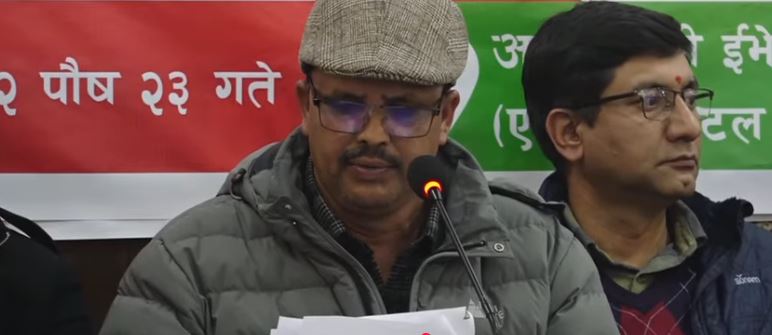
Kathmandu: The long-simmering dispute within the Nepali Congress has reached a flashpoint, with a dissident faction of the party formally announcing a special general convention in defiance of the central leadership.
The pro-special convention group announced on Wednesday that it will hold a special general convention on January 11 and 12 (Poush 27 and 28) in Kathmandu, directly challenging the authority of party president Sher Bahadur Deuba and the Central Working Committee (CWC).
The announcement was made at a press conference in Kathmandu by leaders aligned with the party’s reformist camp, escalating internal tensions at a time when the country is preparing for elections scheduled for March 5.
The move follows an application submitted on October 15, when around 54 percent of the party’s general convention representatives formally demanded the convening of a special general convention. The application was submitted to Acting Party President Purna Bahadur Khadka, but the CWC neither discussed nor took any decision on the demand, even though the CWC meeting stretched for more than a month.
Following the September Gen Z protests, Deuba had appointed Khadka as acting president and left for Singapore for medical treatment, a move widely seen as a retreat from active party management. After his return, however, Deuba resumed control of the party and dismissed calls for a special general convention.
At the forefront of the special convention push are General Secretaries Gagan Thapa and Bishwo Prakash Sharma, who argue that the extraordinary gathering became necessary only after the party leadership postponed the regular general convention.
According to them, there would have been no need for a special convention had the regular general convention been held on schedule. However, after the party decided to defer the regular convention to May, they moved ahead with plans for a special one.
The Nepali Congress statute clearly states that if at least 40 percent of general convention representatives demand a special general convention, it must be convened within three months. Despite this provision, Deuba has remained opposed to holding a special convention, citing the majority support he enjoys within the CWC.
This has deepened the rift between the party establishment and the faction led by Thapa and Sharma, who accuse the leadership of undermining the party statute and avoiding accountability amid growing dissatisfaction within the rank and file.
The impact of the rift was visible on Wednesday during the filing of nominations for the National Assembly elections. The Thapa-Sharma faction was denied any seats, while the Deuba-led establishment shared nine seats with a third faction within the party led by Shekhar Koirala, which was allocated three seats.
Both Thapa and Sharma, however, were absent from Wednesday’s press conference organised to announce the special convention. Several Central Committee members, including Pratima Gautam, Prakash Snehi, and Ajay Babu Shivakoti, were present, signaling significant backing for the move within sections of the party leadership.
Supporters of the special general convention have also begun mobilising through social media campaigns, urging general convention representatives to participate and portraying the event as a necessary step to protect internal democracy within the party.
In a statement issued after the press conference, the organisers said they were proceeding in full compliance with the party statute.
“Fully respecting the spirit and essence of the party statute, we cordially appeal for the enthusiastic and active presence and participation of all central general convention representatives in the Special Central General Convention scheduled to be held in Kathmandu on Poush 27 and 28, 2082,” the statement said. “The necessary organisational preparations are being carried out at a rapid pace.”
The announcement has effectively formalised a parallel power struggle within the Nepali Congress, Nepal’s grand old party, raising questions about party unity, leadership legitimacy, and the party’s role in national politics in the months ahead.